

“Sharing vocabulary does not mean sharing a dictionary.” – Anonymous
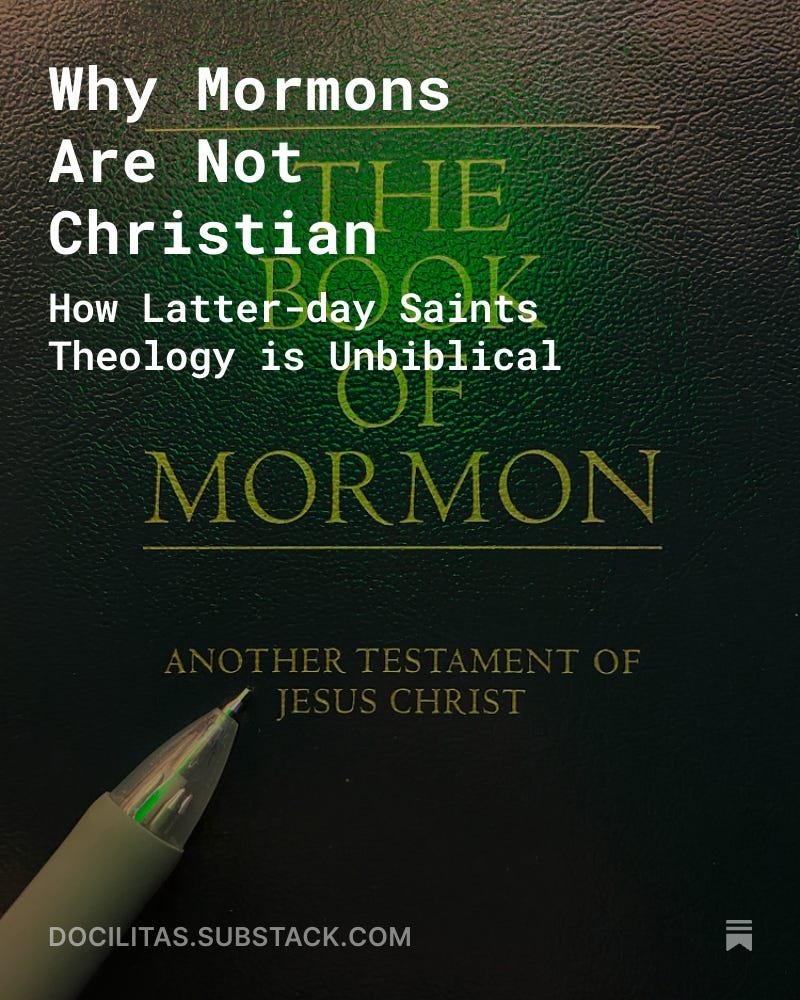
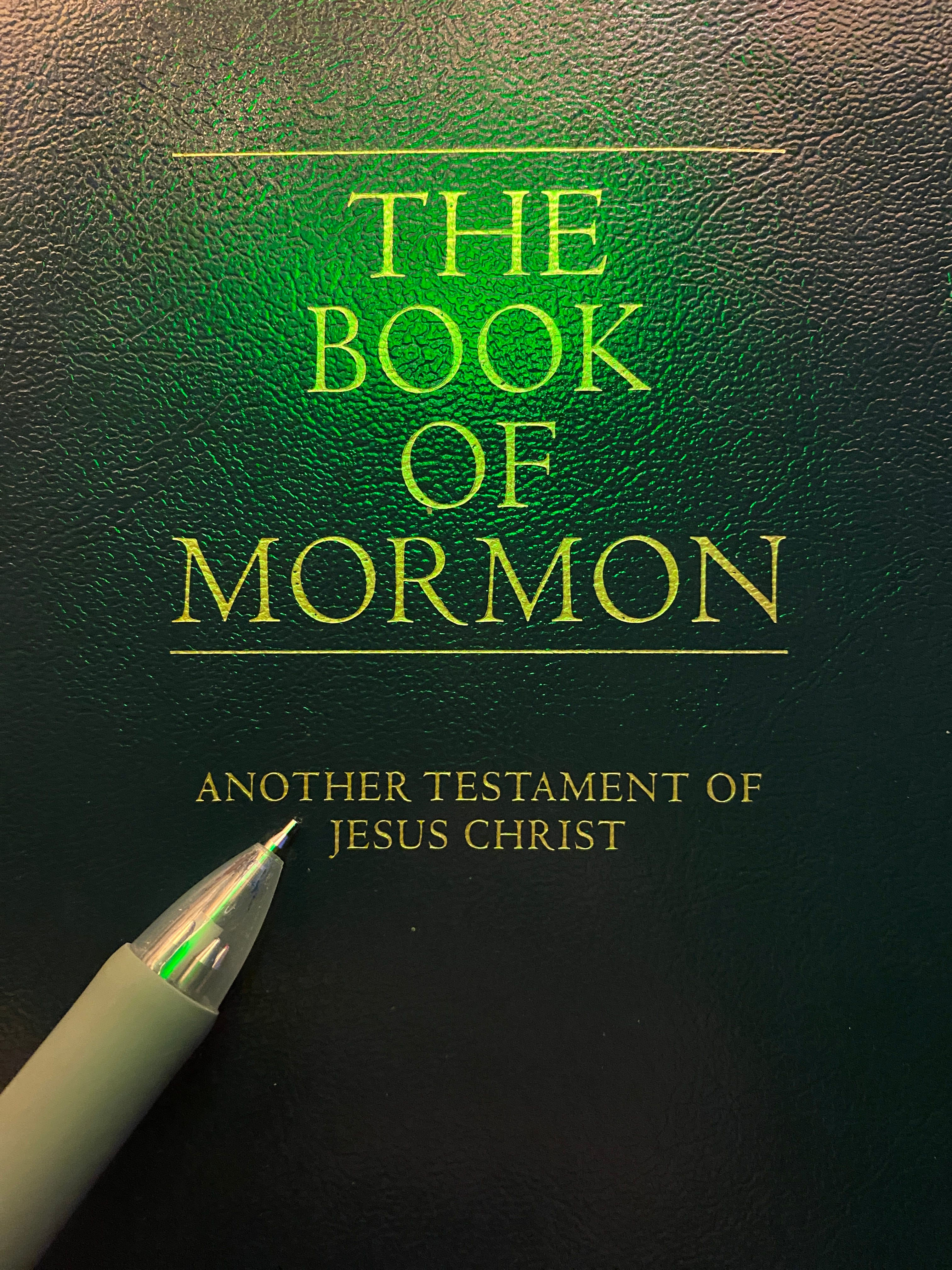
This quote captures the heart of the confusion many face when encountering Mormonism. The Church of Jesus Christ of Latter-day Saints (LDS) presents itself as another Christian denomination. It uses familiar words—Jesus, gospel, grace, salvation—but behind those words lie radically different meanings. And perhaps nowhere is this difference more obvious than in the very subtitle printed on the Book of Mormon: “Another Testament of Jesus Christ.”
But is it truly another of the same kind… or another of a different kind altogether?
It’s a straightforward process to determine whether LDS members proclaim the same gospel message that Jesus and His apostles did. We simply need to compare the biblical gospel recorded in Scripture and affirmed by Christ Himself with the version taught in the Book of Mormon and other LDS scriptures.
That’s what we’ll do here now.
What Is the Gospel, According to the Bible?
The word gospel (Greek: euangelion) means good news. According to the Bible, the gospel is the announcement of what God has done through Jesus Christ to save sinners and reconcile us to Himself.
The apostle Paul lays out the gospel with unmistakable clarity in 1 Corinthians 15:1–4:
Now I would remind you, brothers, of the gospel I preached to you… that Christ died for our sins in accordance with the Scriptures, that he was buried, that he was raised on the third day in accordance with the Scriptures…
“According to the Scriptures” here refers to the Old Testament promises and prophecies that pointed to the coming Messiah (cf. Isaiah 53; Psalm 22).
This good news centers on the historical, bodily death and resurrection of Jesus Christ for the forgiveness of sins, (including yours). Paul warns that any deviation from this gospel is not just another perspective, but a soul-endangering distortion:
But even if we or an angel from heaven should preach to you a gospel contrary to the one we preached to you, let him be accursed. —Galatians 1:8–9
The Bible also emphasizes that salvation is by grace alone, through faith alone, in Christ alone, not by human works, ordinances, or additional revelation (Ephesians 2:8–9; Titus 3:5; Romans 3:28). Jesus Himself declared, “I am the way, the truth, and the life. No one comes to the Father except through me” (John 14:6).
There is no Plan B.
There is no ladder to godhood.
There is only the cross.
The Bible’s Clear Warning: No Other Gospel
In Galatians 1:6–9, the Apostle Paul issues a sobering warning:
“I am astonished that you are so quickly deserting him who called you in the grace of Christ and are turning to a different gospel—not that there is another one, but there are some who trouble you and want to distort the gospel of Christ. But even if we or an angel from heaven should preach to you a gospel contrary to the one we preached to you, let him be accursed.” (Gal. 1:6–8, ESV)
Paul’s choice of Greek words is vital. He uses “heteron” (ἕτερον) for “different,” which doesn’t mean a helpful companion version. It means something of a different kind. In contrast, “allos” would indicate another of the same kind. Paul is not being poetic. He is drawing a theological line in the sand: there is only one gospel.
Anything else is a distortion.
So, when Joseph Smith (founder of Mormonism) claims that an angel appeared to him to deliver another testament, Paul’s warning should send sirens ringing. Whether through angelic vision, revelation, or golden plates (as Smith claimed), if the message contradicts the once-for-all gospel delivered by Christ and His apostles, it is, according to Scripture, under a curse.
“Another Testament” or a Different Religion?
It might seem like semantics, but the implications are eternal. The LDS Church claims their Book of Mormon is simply an additional witness. But we must ask: is it consistent with the original testimony of Jesus, or does it redefine Him?
Consider the following comparisons between Christianity & Mormonism:
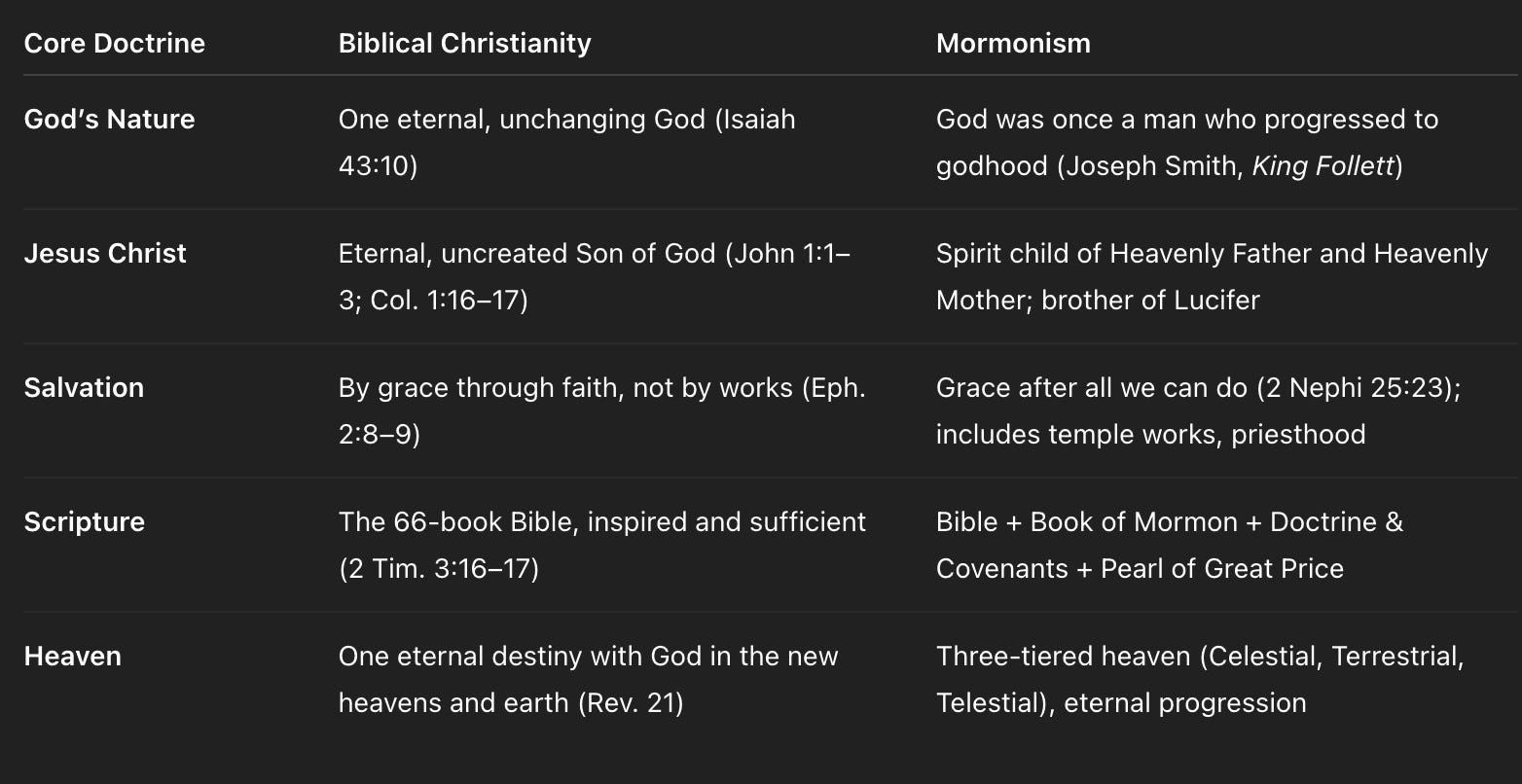
The contrast is not trivial. These aren’t two flavors of the same faith, they are two completely different worldviews. Mormonism undeniably redefines God, Jesus, salvation, and eternity.
What’s in a Word? A Study on “Another”
The English word “another” can be slippery. In normal usage, it might mean:
Another of the same kind (e.g., “I’ll have another slice of pizza.”)
Another of a different kind (e.g., “Let’s try another restaurant.”)
In Greek, this distinction is made explicit. Paul’s use of “heteron” (ἕτερον) in Galatians 1:6 draws attention to the second meaning: a different kind. It’s where we get our English word “heterodox”—departing from accepted belief.
That’s precisely the issue with the Book of Mormon. Calling it “another testament” invites the assumption of harmony, but what it delivers is heterodoxy.
A Gospel That Doesn’t Need Supplements
The biblical gospel is stunningly simple, and gloriously sufficient.
“Christ died for our sins in accordance with the Scriptures,
that he was buried, that he was raised on the third day in accordance with the Scriptures.” -1 Corinthians 15:3–4
This gospel saves. It doesn’t need extra revelation or hidden texts. It doesn’t require secret handshakes or temple rituals. It needs only faith in the risen Son of God.
As Jude (a book in the Bible for those not aware) writes, believers are to “contend for the faith that was once for all delivered to the saints” (Jude 1:3). Not updated. Not expanded. Not revised by a 19th-century prophet. Delivered.
Once.
For.
All.
Same Language, Different Meanings
So when someone says, “But Mormons believe in Jesus too,” it’s worth pausing to ask: Which Jesus?
Muslims don’t believe Jesus was crucified or resurrected, this means everything as it relates to our salvation (yours included). Jehovah Witnesses don’t believe Jesus is the Uncreated, Eternal Son of God but was actually Michael the Archangel in disguise, and Mormons believe in a Jesus whose sacrifice on the cross was not enough to atone for your sins and is the spirit brother of Satan. All are different Jesus’s from the historic and Biblical Jesus who is the only One who can save us from our sins.
The Jesus of the Bible is:
The eternal Son, not a spirit-brother
The Creator of all, not a created being
The only way to God, not one god among many
That’s why the phrase rings true: Sharing vocabulary does not mean sharing a dictionary. Just because LDS language sounds Christian doesn’t mean the theology underneath is.
Final Thoughts: A Loving Warning
To my Mormon friends reading this, I don’t write these things out of disdain, but out of conviction and care. I’ve known and loved many kind, sincere Latter-day Saints. But sincerity cannot rewrite truth. And eternity is too important to get wrong.
The gospel is not “another testament.” It is the testament. The only good news that saves.
“There is salvation in no one else, for there is no other name under heaven given among men by which we must be saved.”
(Acts 4:12)
Let’s Talk
I’d love to hear from you whether you agree, disagree, or want to go deeper. You can leave a comment, share this post with a friend, or email me directly. Let’s pursue truth together.
Grace and peace, Rob