

The New Testament is God’s message of His new covenant, a promise made to all who believe in Jesus Christ. Through Jesus, who came to earth as a man, God speaks to us and makes a way for us to be made right with Him. By the Holy Spirit, God inspired the writers of the New Testament to record His truth, showing how Jesus fulfills the promises and purposes first revealed in the Old Testament and how we now live as His people in these last days.[1] Put another way, the New Testament is God’s covenant book for His people today that reveals His redemptive plan through Jesus Christ, and the counsel and guidance of the Holy Spirit.
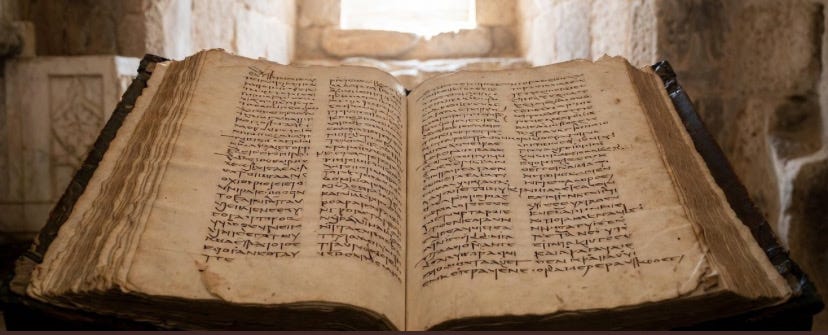
Both the Old and New Testaments together establish God’s complete revelation to us. As such, it “is in the final position of authority” over our lives, our understanding of God, and His will.[2] Now that we have defined what the New Testament is, we will look at its character and significance; its nature, occasion, purpose, context, unity, diversity, and transmission.
The Character and Composition of the New Testament
To understand the character of the New Testament, we need to first understand its nature. Its essence is that it is covenantal. It is our canon, our “rule,” or “standard” that started coming together in the late and proceeded through the latter half of the first century.[3] It is “breathed out by God,” so its source is God Himself.[4]
The occasion or what caused the New Testament to come about, its catalyst, was the coming Messiah and the giving of the Holy Spirit, marking what Scripture calls “the last days,” when God now speaks to us by His Son, Jesus Christ (Hebrews 1:1-2 ESV).[5]
Purpose and Context of the New Testament
The purpose of the New Testament is to instruct, preserve, and equip God’s people, “in these last days.” As Paul explains in 2 Timothy 3:16-17, “All Scripture is breathed out by God and profitable for teaching, for reproof, for correction, and for training in righteousness, that the man of God may be complete, equipped for every good work.” The Old Testament points forward to God’s promises, where the New Testament gives us the purpose and person of that promise, Jesus Christ. “This new covenant inaugurates these last days, and we await the time when they’ll be fulfilled.”[6]
Many naturally ponder, “Why did Jesus decide to come to earth way back then, 2000 years ago, and not now when I’m alive?” The truth of the matter is that the “conditions were indeed ideally suited for the coming of Jesus” when He did come.[7] Despite being known for its brutal and torturous capital punishment, the first-century Roman Empire did institute a peaceful presence, albeit through fear and military presence. This made it conducive for the gospel message to spread quickly before Jesus’s resurrection.[8] Additionally, the Romans were great at infrastructure, specifically roads, which facilitated the spread of the gospel throughout the ancient world quickly.
These factors, plus the Greek language being made the “language of commerce” throughout the Roman world by Alexander the Great’s expansion, and the fact that Jews were anticipating the Messiah as Jesus claimed to be the One (Jn. 4:25-26, Mt. 16:15-17, Lk. 4:17-21, Mk. 14:61-62), made is so He came “at just the right time.”[9] This context shaped how the New Testament was written as well as the audiences in which the deeds and message of Christ were done. While many were looking for a military Messiah, Jesus came in humility, unassumingly (Zech. 9:9, Phil. 2:5-8, Isa. 53:2-3, Jn. 18:36) rather than carrying a sword of rebellion.
Unity, Diversity, and Transmission
Jesus understood that the Old Testament prophecies and promises pointed to Him and that He was God’s fulfillment of these. His open confession and acknowledgment of this often led the leaders of the time to try to kill Him (Lk. 4:16-21, Lk. 24:25-27, Jn. 5:39-47, Jn. 8:58-59). The diversity in the New Testament is clear in its many genres: Gospels, letters and epistles, history, and prophecy, all of which culminate and remain consistent with the same gospel message of Jesus Christ. Lastly, the transmission of the New Testament demonstrates God’s sovereign control over His record, His story, and His message. Despite the many different gospels before the year 600, about 30, God protected His Word through the church, enabled by the Holy Spirit, which remains intact today, guiding us in the same manner and for the same purpose: to make Him known to all nations (Mt. 28:18-20).[10]
BIBLIOGRAPHY
Köstenberger, Andreas J., L. Scott Kellum, and Charles L. Quarles, The Cradle, The Cross, and The Crown (Brentwood, TN: B&H Academic), 2016.
Montgomery, Dr. Travis. New Testament Survey I: Unit 1 Lecture. Midwestern Baptist.Theological Seminary, November 22, 2023.
https://www.youtube.com/watch?v=VbhKsOA3pvs
Citations
[1] Dr. Travis Montgomery, New Testament Survey I: Unit 1 Lecture (Midwestern Baptist Theological Seminary, November 22, 2023)
https://www.youtube.com/watch?v=VbhKsOA3pvs
[2] Andreas J. Köstenberger, L. Scott Kellum, and Charles L. Quarles, The Cradle, The Cross, and The Crown (Brentwood, TN: B&H Academic, 2016), 5.
[3] Ibid., 3-4.
[4] Ibid., 52.
[5] Montgomery, New Testament Survey I: Unit 1 Lecture
[6] Ibid.
[7] Köstenberger, Kellum, and Quarles, The Cradle, The Cross, and The Crown, 88.
[8] Ibid., 88.
[9] Köstenberger, Kellum, and Quarles, The Cradle, The Cross, and The Crown, 89.
[10] Ibid., 18.