

A Night of Confusion
Every October 31, debates light up the Christian world like jack-o’-lanterns.
Some say Halloween is a pagan festival baptized in candy.
Others insist it began as a holy vigil, All Hallows’ Eve (the night before All Saints’ Day).
But who’s right?
The answer reveals a fascinating truth about the Church, the calendar, and the power of Christ to redeem even the darkest night.
The Forgotten Feast
The word Halloween comes straight from All Hallows’ Eve, the Christian vigil before the Feast of All Saints.
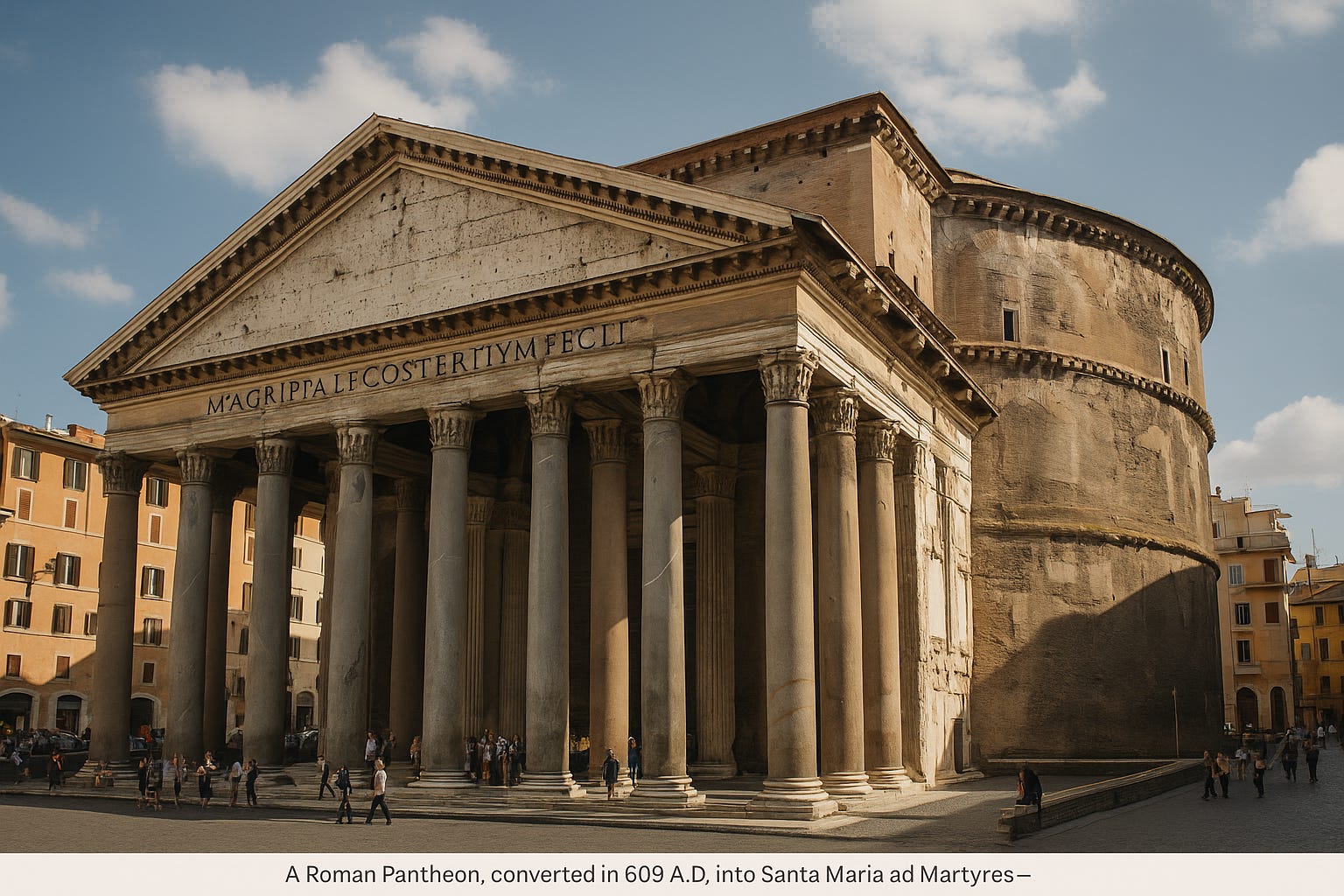
In A.D. 609, Pope Boniface IV consecrated the Roman Pantheon to “St. Mary and All Martyrs,” establishing a feast on May 13 (Encyclopaedia Britannica). Over a century later, during the 8th century, Pope Gregory III dedicated an oratory in Rome to “All the Saints,” reportedly on November 1 (CatholicCulture.org).
Then, in A.D. 835, Pope Gregory IV extended that November celebration throughout the Western Church, fixing the date we still observe today.
So, All Hallows’, or All Saints’, Day came to commemorate all believers who have finished their race in Christ. And October 31, All Hallows’ Eve, served as its vigil: a night of prayer, fasting, and gratitude for Christ’s victory in His saints.
Pagan Myths and Partial Truths
Yes, the Celts observed a harvest-end festival called Samhain (pronounced SAH-win), marking the onset of winter.
But the notion that the Church stole Samhain doesn’t hold up to scrutiny.
Historians largely agree (Ronald Hutton, The Stations of the Sun (1996)):
The Christian feast originated in Rome, not Ireland.
As Christianity spread, it naturally directed and influenced local harvest customs — bonfires, feasts, masks — teaching others their meanings in Christ.
What some call pagan roots are more accurately redeemed branches.
The Church doesn’t imitate darkness; it redeems it by shining the light of Christ into it.
The Vigil of Light
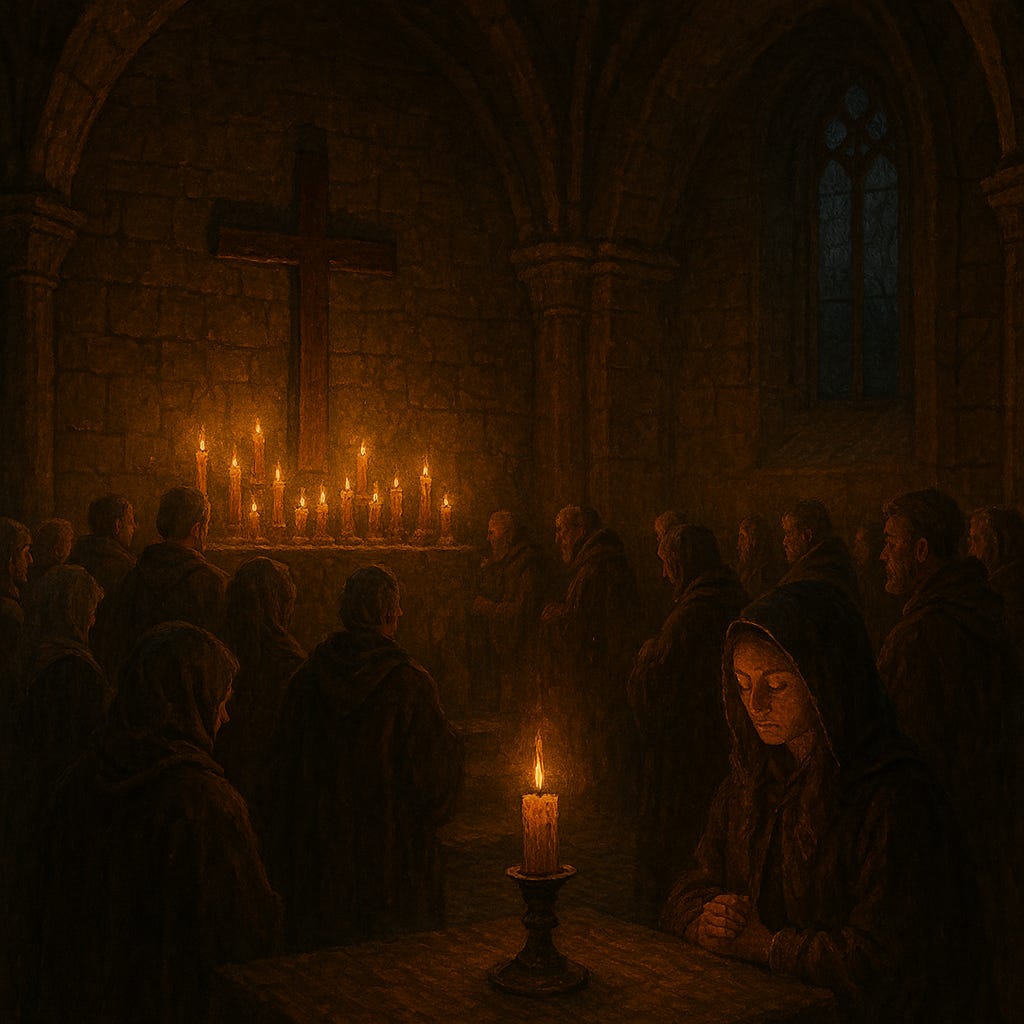
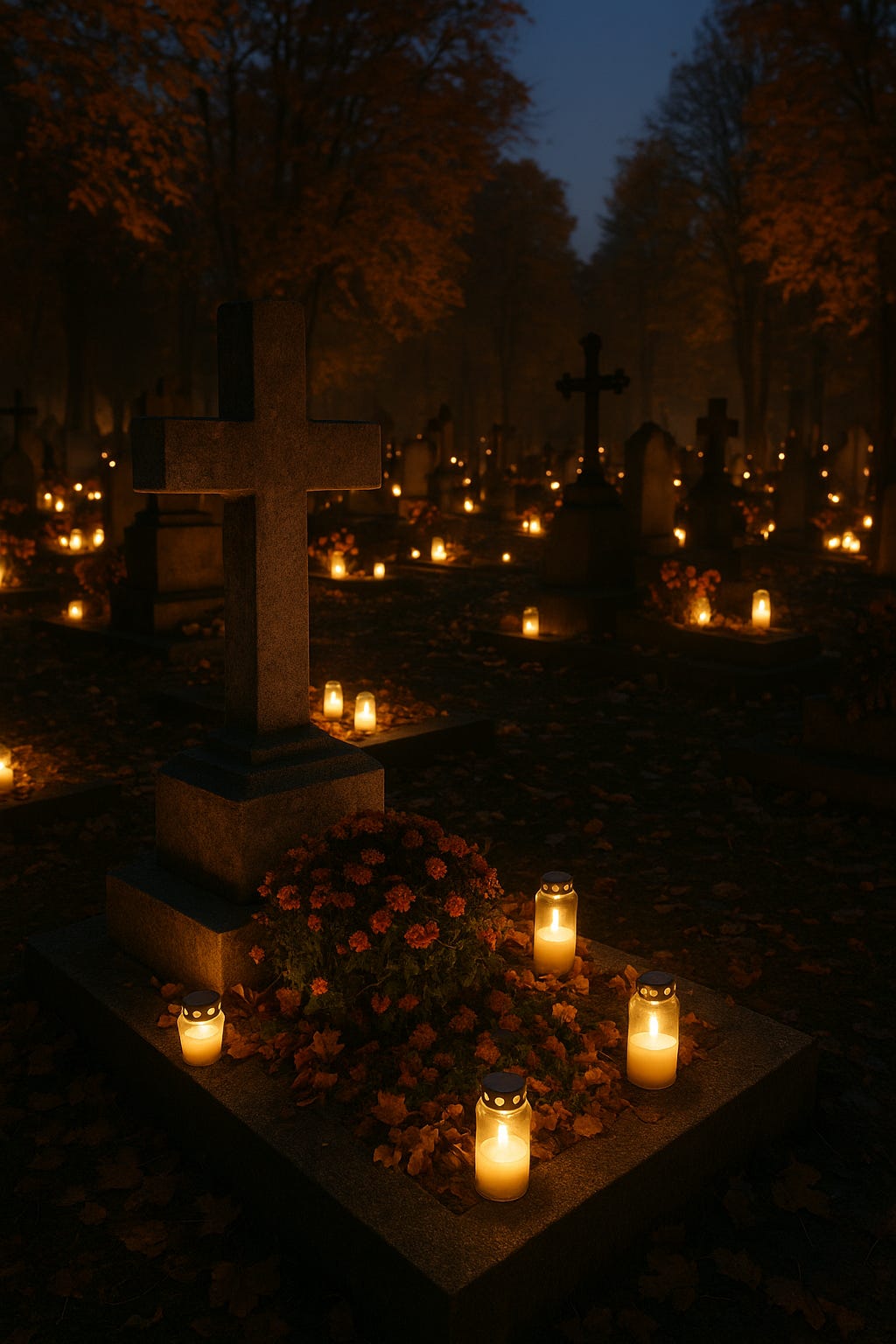
On All Hallows’ Eve, Christians once kept watch through the night, remembering saints and martyrs.
They lit candles in cemeteries, not to summon spirits, but to declare:
“The light shines in the darkness, and the darkness has not overcome it.” (John 1:5)
Even the timing, when autumn fades and the world grows dim, preaches the Gospel: Christ’s light endures while all else withers.
Costumes, Lanterns, and Mocking the Devil
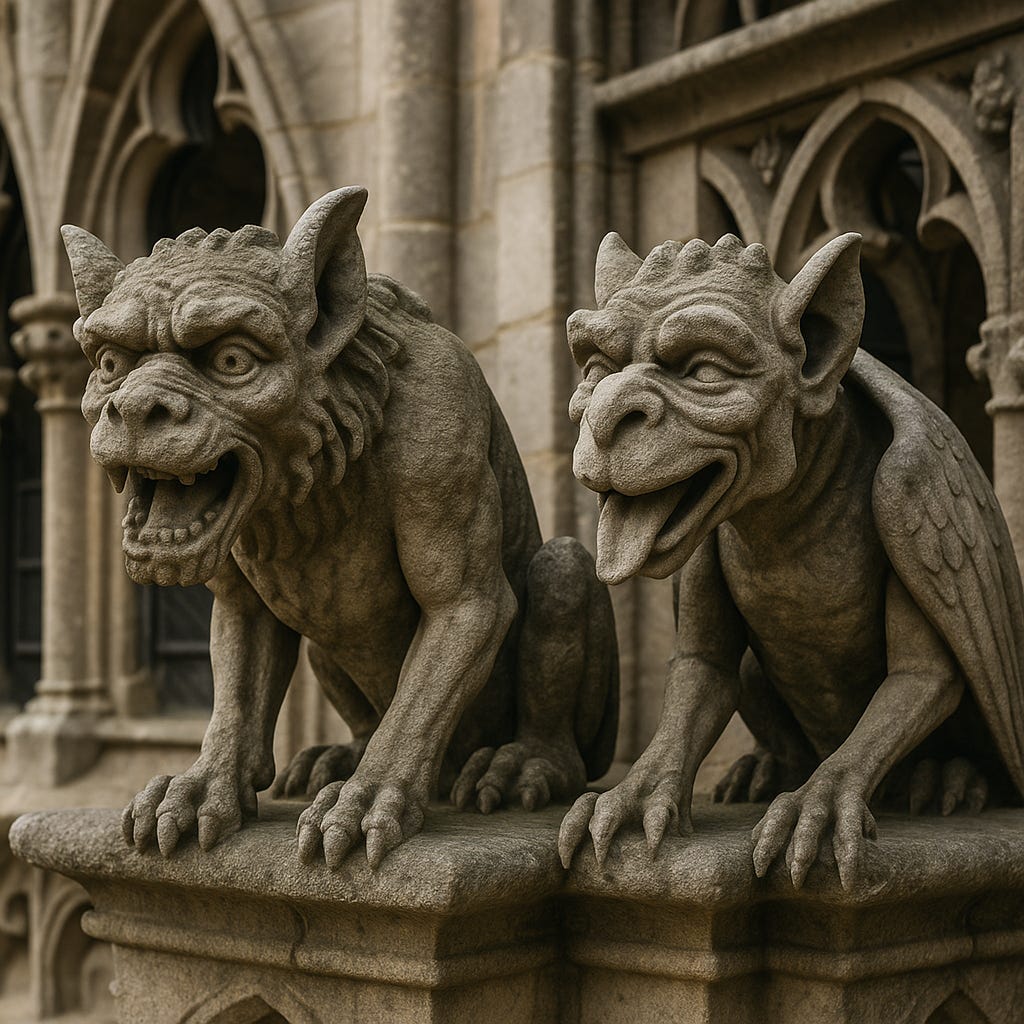
Medieval Christians loved irony. Gargoyles on cathedrals and fool’s festivals weren’t demonic; they were holy mockery.
As Martin Luther, Reformer, quipped, “The best way to drive out the devil, if he will not yield to Scripture, is to jeer and flout him.” (Table Talk, Weimar Edition)
Grotesque masks, carved turnips (the ancestors of pumpkins), and festive mischief once dramatized a profound truth:
Death and darkness are already defeated.
The laughter of the redeemed is itself an act of defiance.
Reclaiming the Night
So should Christians celebrate Halloween?
Not as the world does, but neither by retreating in fear.
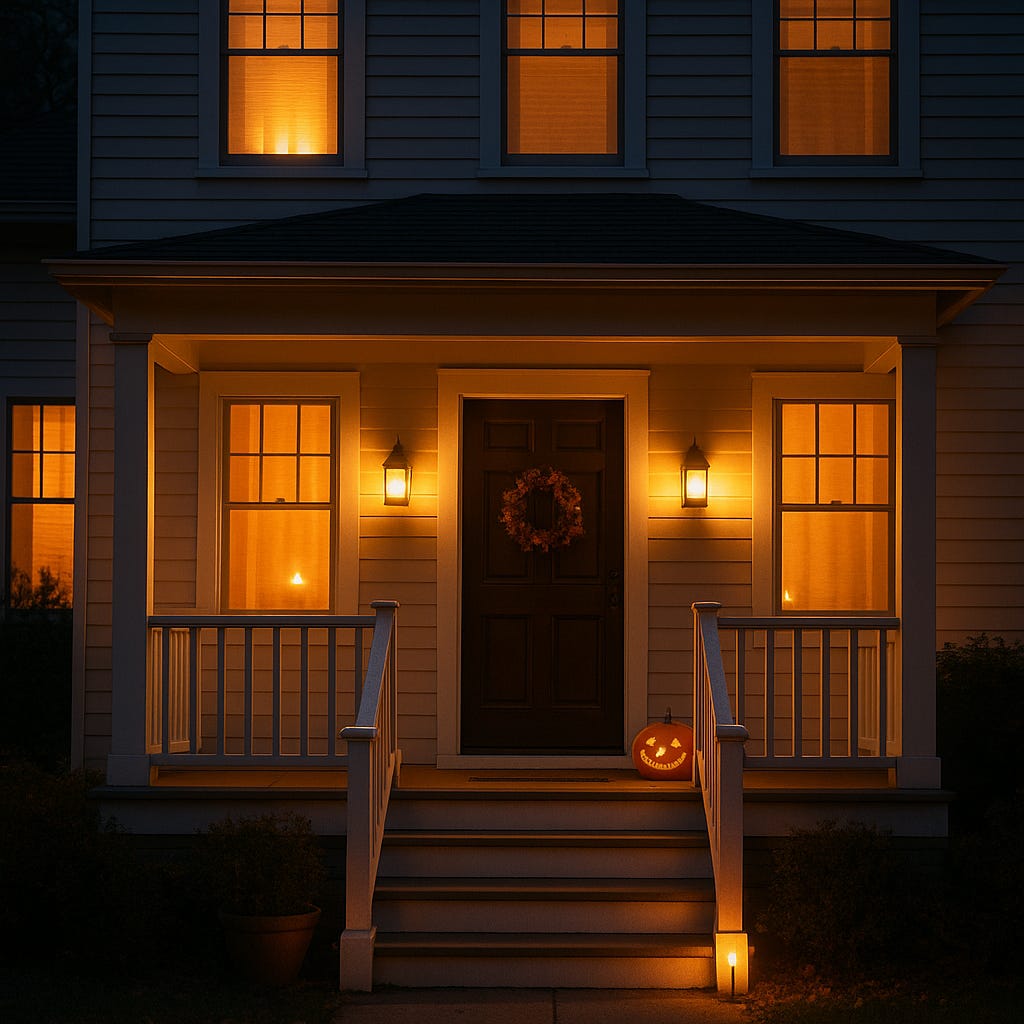
Open your door. Venture out and about.
Offer generosity instead of suspicion.
Let your light, literally and spiritually, shine. Ephesians 5:16 comes to mind on this point.
“Redeem the time, because the days are evil.” (Ephesians 5:16)
When the world glorifies fear, Christians can embody fearless hospitality. When culture obsesses over death, we celebrate the Defeater of death.
Christ, Lord of Every Season
Halloween is neither wholly pagan nor secular. It is a Christian feast reshaped by time and culture, distorted by the enemy in large part, but is waiting to be reclaimed in my opinion.
On this night, we remember that the tomb is empty, the saints are alive in Christ, and the light still shines.
So light a candle. Smile at your neighbors.
Tell the story of the saints who shone in dark times.
Because the real horror story ended at Calvary, and the sequel is Resurrection. And a truly horrific ending awaits those who deny the message of Christ. This should compels us as Christ-followers to proclaim His message at all times in all places, both locally and globally.
Reformation Day: Light Breaking Through Darkness
Lastly, October 31 isn’t only All Hallows’ Eve — it’s also Reformation Day, one of the most pivotal dates in Church history.
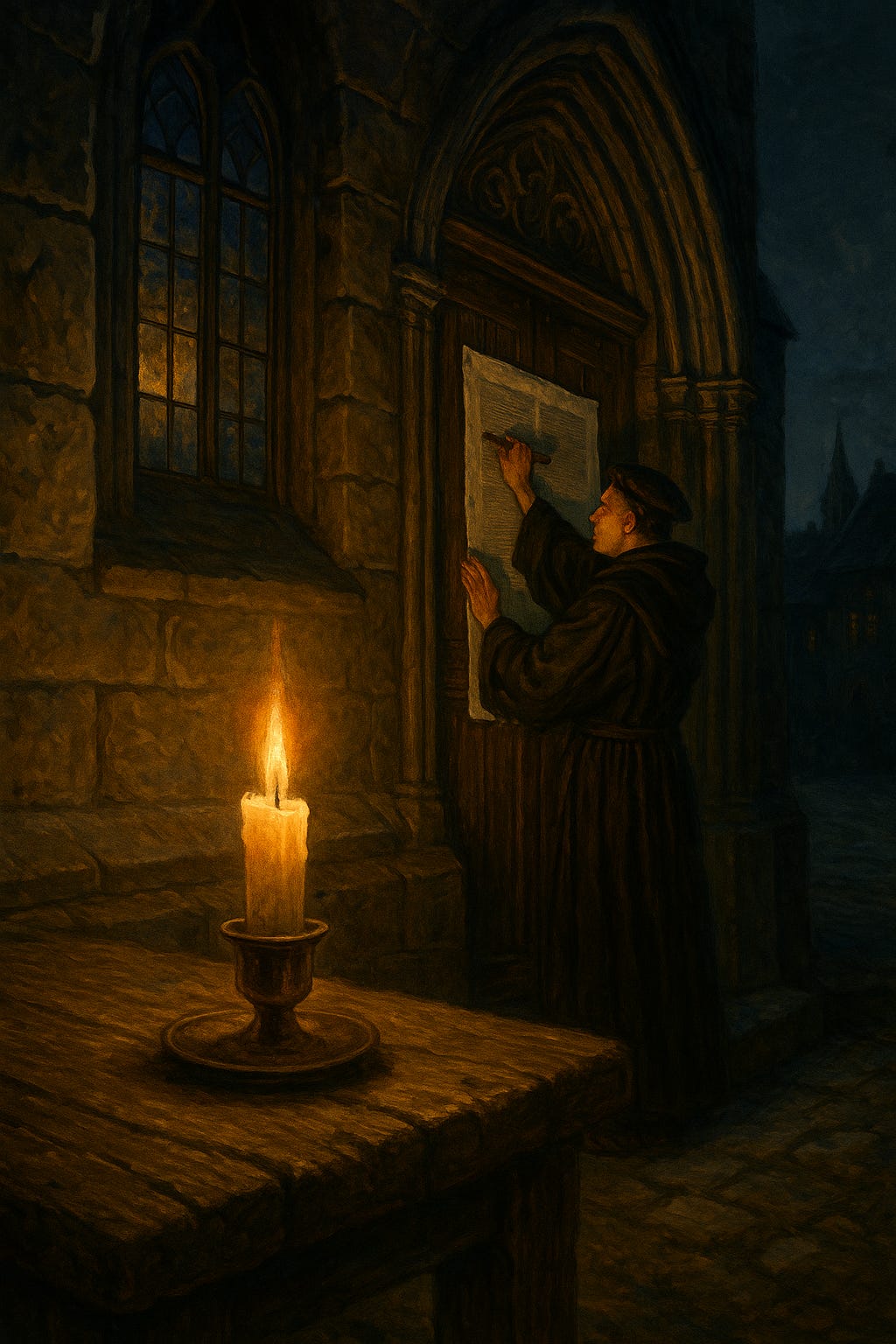
On October 31, 1517, a young German monk named Martin Luther walked to the doors of the Castle Church in Wittenberg and nailed a list of 95 Theses that were actually his statements for an academic debate challenging the sale of indulgences and abuses within the medieval Church.
Luther never intended to start a revolution; he wanted a reformation of hearts and doctrine. Yet his bold act became the spark that ignited the Protestant Reformation, a movement calling the Church back to the authority of Scripture and the purity of the Gospel.
The central cry of that movement reverberates still today:
Sola Scriptura — Scripture alone
Sola Gratia — Grace alone
Sola Fide — Faith alone
Solus Christus — Christ alone
Soli Deo Gloria — To God alone be the glory
In many ways, Reformation Day and All Hallows’ Eve belong together — both remind us that light breaks into darkness, truth conquers superstition, and Christ alone reigns over life, death, and the soul.
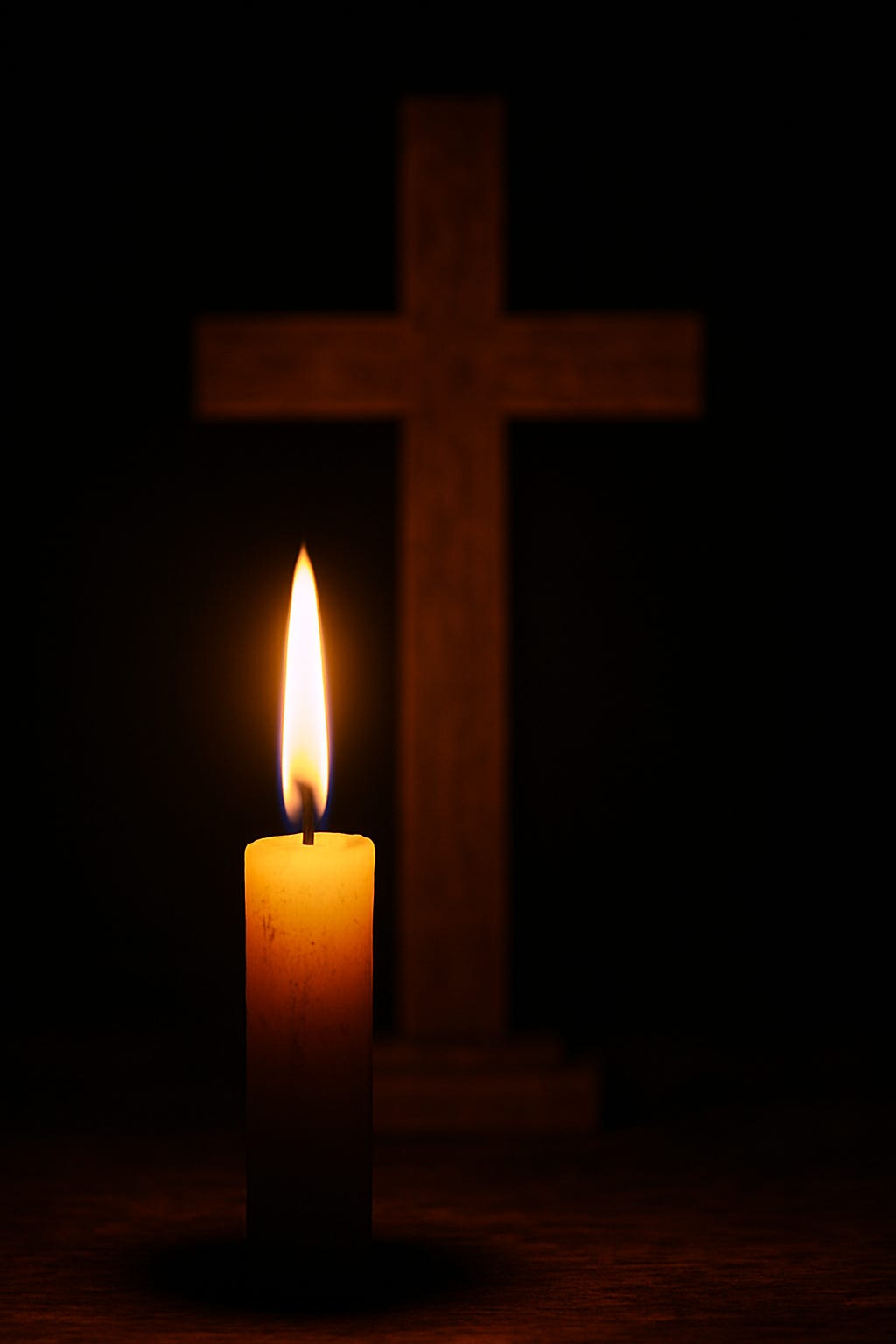
Remember that on this same night, over 500 years ago, a candle of truth was lit in Wittenberg, and its flame still burns today.
Further Reading & Sources
All Saints’ Day, Encyclopaedia Britannica
Ronald Hutton, The Stations of the Sun (Oxford University Press, 1996)
The Ninety-Five Theses, Martin Luther (1517)
The Book of Common Prayer, Collect for All Saints’ Day
Ephesians 5:16; John 1:5